How Independent Practices Can Stop Losing Revenue
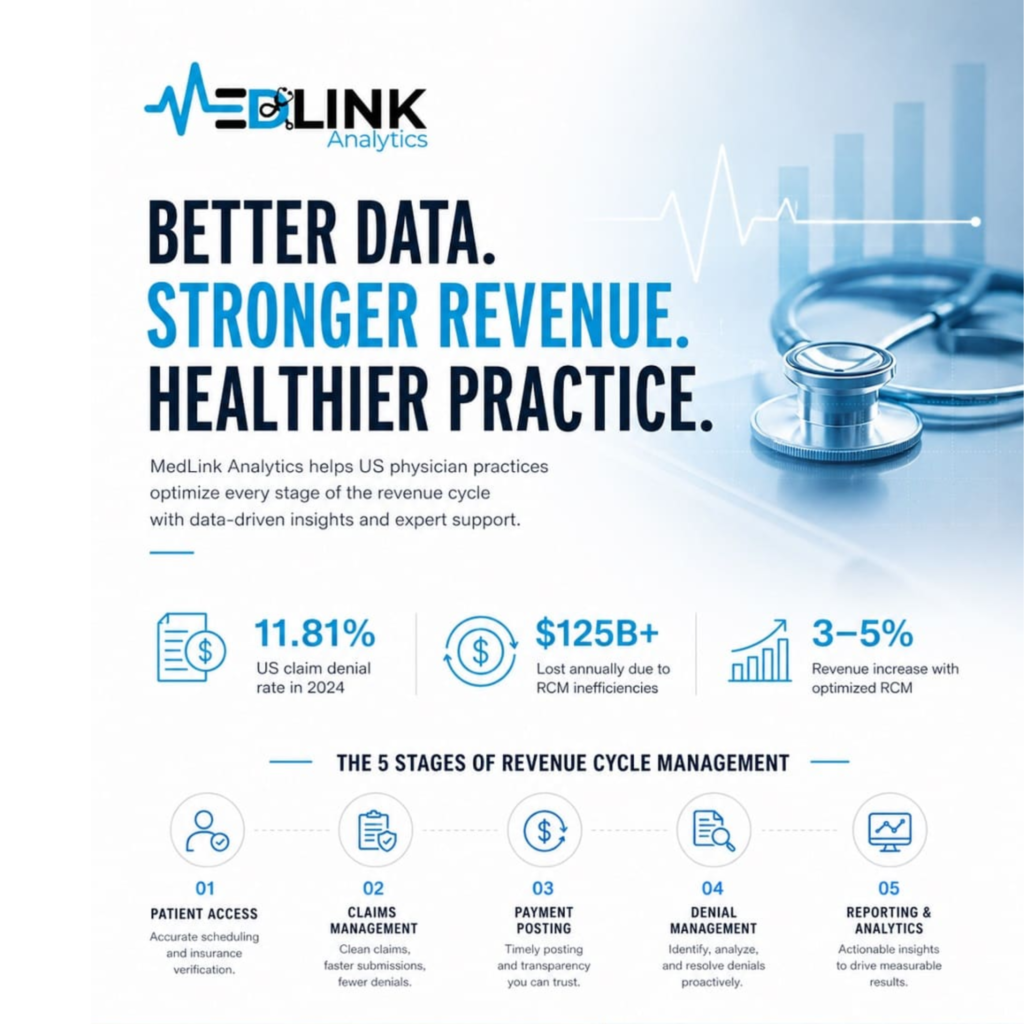
Quick answer: Claim denial management is the process of identifying, correcting, appealing, and most importantly, preventing insurance claim denials before they happen. In 2026, denial rates have climbed at many practices, and industry data shows the cost of reworking a single denied claim often runs into the hundreds of dollars once staff time, resubmission, and delayed payment are factored in. Practices that shift from reactive appeals to front-end denial prevention, clean eligibility checks, accurate coding, and pre-claim scrubbing, typically see meaningfully higher clean claims rates and fewer dollars stuck in aging accounts receivable.
Picking Up Where We Left Off
Last week, we talked about what financial independence really means for a medical practice: collecting the revenue you’ve already earned instead of losing it to a broken billing process. This week, we’re going one level deeper into the single biggest reason that revenue goes missing in the first place, claim denials.
If clean claims and disciplined A/R follow-up are the foundation of a financially independent practice, denial management is the wall that’s hardest to keep from cracking. It’s also the area where most independent practices are quietly bleeding revenue without realizing how much it adds up to over a year.
What Is Claim Denial Management? (Direct Answer)
Claim denial management is the set of processes a practice uses to handle claims that a payer rejects or underpays, and to reduce how often that happens again. It generally works in two layers:
- Reactive denial management, identifying why a claim was denied, correcting the issue, and resubmitting or appealing within the payer’s filing deadline.
- Proactive denial prevention, using eligibility verification, accurate coding, and pre-submission claim scrubbing to stop the denial from occurring in the first place.
Practices that only do the first are always playing catch-up. Practices that build the second into their workflow spend far less time and money recovering money they already earned.
Why Denial Management Is the Defining RCM Issue of 2026
A few shifts are making this the year denial management can no longer be an afterthought:
- Denial rates are trending upward. A growing share of practices and hospitals are reporting final denial rates above 5%, up from years when that figure sat closer to the low single digits, according to recent revenue cycle benchmark surveys.
- Prior authorization requirements keep expanding. More services now require pre-approval than just a few years ago, and a missed or delayed authorization is one of the most common, and most preventable, reasons a claim gets denied.
- Rework is expensive. Industry estimates commonly put the administrative cost of reworking a single denied claim well into the double digits per claim, before counting the revenue delay itself.
- A large share of denied claims are never resubmitted. Once a claim is denied, a significant portion of practices simply write it off rather than pursue it, especially past the 90-day aging mark, when the odds of ever collecting drop sharply.
- Payers are using more sophisticated automated review. As payer-side claim scrutiny becomes more automated, claims with even minor coding or documentation gaps are increasingly likely to be flagged.
The pattern across almost every current industry report is the same: prevention is overtaking recovery as the priority. It’s cheaper, faster, and far less disruptive to a practice’s cash flow to stop a denial before it happens than to fight it afterward.
The Most Common, and Most Preventable, Causes of Claim Denials
Most denials aren’t caused by exotic billing problems. They tend to cluster around a short list of avoidable issues:
- Eligibility and registration errors, coverage lapsed, wrong plan on file, or demographic mismatches
- Missing or expired prior authorizations
- Coding errors or mismatched diagnosis-to-procedure codes
- Missed filing deadlines
- Duplicate claims or bundling issues
- Incomplete or non-specific clinical documentation
Notice how many of these happen before a claim is ever submitted. That’s the core insight behind modern denial management: the earlier in the workflow a problem is caught, the cheaper it is to fix.
A Prevention-First Denial Management Workflow
Here’s what a practical, prevention-oriented approach looks like in practice:
- Verify eligibility and benefits before the appointment, not at check-in, and not after the claim bounces back.
- Confirm prior authorization status early, with enough lead time to resolve gaps before the date of service.
- Scrub every claim before submission against payer-specific rules, not just general coding rules.
- Track denials by root cause, not just by dollar amount, so the practice can fix the process instead of just the individual claim.
- Set a firm follow-up cadence for A/R so no claim quietly ages past the 90-day mark.
- Review denial trends monthly with billing staff or a revenue cycle partner, so recurring issues get resolved at the source instead of repeating every month.
None of these steps require exotic technology. They require consistency — which is exactly the resource most independent practices are shortest on, given everything else competing for staff time.
Frequently Asked Questions
Q: What is claim denial management in medical billing? A: It’s the process of correcting and appealing denied insurance claims, combined with the front-end steps, eligibility checks, accurate coding, and claim scrubbing, that prevent denials from happening in the first place.
Q: What is a good denial rate for a medical practice? A: Most revenue cycle benchmarks consider a final denial rate under 5% healthy. Rates above that generally signal recurring, fixable problems earlier in the billing workflow, such as eligibility or authorization gaps.
Q: How much does it cost to rework a denied claim?
A: Estimates vary by specialty and payer mix, but the administrative cost of reworking a single denied claim commonly runs into the tens of dollars in staff time alone, not counting the delayed or lost revenue if the claim is never successfully resubmitted.
Q: Should a practice appeal every denied claim? A: Not always. It’s usually more efficient to prioritize appeals by recoverable value and likelihood of success. while addressing the root cause so the same denial doesn’t keep recurring on future claims.
Q: What’s the difference between denial management and denial prevention? A: Denial management is what happens after a claim is denied, correction and appeal. Denial prevention happens before submission, through eligibility verification, prior authorization tracking, and claim scrubbing. The most effective revenue cycle strategies in 2026 rely on both, with an increasing emphasis on prevention.
Q: Can outsourcing denial management help an independent practice? A: For many practices, yes. Denial patterns are often easier to catch with dedicated staff tracking payer-specific rules and trends across many claims — something a busy in-house team juggling patient care often doesn’t have time to do consistently.
Turning Denial Management Into a Growth Advantage
The practices pulling ahead in 2026 aren’t necessarily the ones with the most billing staff. They’re the ones that treat every denial as a signal. A piece of information about where the process is breaking down. Rather than just a claim to rebill.
That shift, from reactive firefighting to proactive prevention, is quietly becoming the difference between practices that hold onto their earned revenue and ones that keep losing a slice of it every month without ever tracing it back to the source.
Let MedLink Analytics Take Denial Management Off Your Plate
MedLink Analytics provides medical billing, denial management, credentialing, and full revenue cycle management services for independent physician practices across the United States.
If your practice doesn’t currently track denial rates by root cause, or isn’t sure what its real final denial rate is, that’s usually the first sign there’s recoverable revenue sitting in the pipeline right now.
Check our core Services
📞 +1 (720) 445-4634
✉ contact@medlinkanalytics.com
📍 Denver, CO | Serving all 50 states
🌐 medlinkanalytics.com
Next week: we’ll break down what a healthy accounts receivable aging report should actually look like, and the warning signs to catch before claims cross the 90-day mark.